Showing posts with label Austria. Show all posts

Friday, November 30, 2012

From Dinosaurs to Dodos - Vienna's Natural History Museum

Having already gone 2 for 2 in the Natural History Museum column, with fantastic and interesting visits to the Natural History Museum in London and La Specola in Florence, we decided to try and continue our streak in Vienna. The Naturhistorisches Museum Wien (or Museum of Natural History of Vienna) was originally created to house the extensive collection of Emperor Franz Joseph I and now contains more than 30 million objects (yes, million with an 'm'), some of which date back over half a billion years.

The facade of the Natural History Museum (via)
Immediately upon entering the museum, the wealth of the Habsburg empire is evident. Located in Maria-Theresian Platz across from its sister building (the Museum of Fine Arts), the building is more reminiscent of a palace than a museum, and features amazing frescoes, sculptural details, paintings, and mosaics.

Frescoes and paintings adorn the interior
 
Still in awe of the building, we made our way to the first floor exhibits which provide an amazing display on the history of the planet and the human race. They begin with an extensive rock, mineral, and gemstone collection, including a 115kg piece of quartz, and moves onto the oldest meteorite collections in the world, ranging in size from pea-sized to large boulders from around the world. 

Cases and cases of rare and interesting rocks and minerals

Fossilized dinosaur footsteps


Fossils galore greet visitors as they continue through the halls of the ground floor. Trilobites, sea scorpions, Nautilus shells, and countless other interesting fossilized specimens are made all the more compelling by the addition of models of what they would have looked like when they were walking (or swimming) the planet millions of years ago. The next few rooms, however, with numerous dinosaur skeletons, including an Allosaurus, Diplodocus, and Pterodactyl, draw the largest crowds and prove that dinosaurs still have the same awe-inspiring effect on adults as they do on children.

A massive Allosaurus immediately greets visitors in the dinosaur hall

Travis beside an Ultrasaurus leg

A feathered Deinonychus model


Finally we reached the real star of the museum - the 24,000 BC Venus of Willendorf. Discovered in 1908, the small statue of an interestingly shaped woman is one of the most important and oldest known statues in the world. In addition to the Venus, Mammoth hides used as clothing, 100,000-year old stone tools, and other objects of prehistoric human life are fascinating to look at.

The Venus of Willendorf (via)

Sculpture outside the museum

Their dodo


Although the first floor was the most impressive, especially the vast fossil and meteorite collections, we also took some time to wander through the second floor which covers the diversity of life on our planet from protozoans to elephants. A seemingly unending collection of taxidermy specimens and skeletons, including a number of critically endangered or extinct species (even a dodo), are regarded as one of the best in the world, however that many animals in glass cases is also a bit eerie. In addition to a ton of taxidermy, some original microscopes and old blown glass replicas of microscopic organisms add to the collection. 

With so many different museums to choose from in a city as diverse and culturally minded as Vienna, it was difficult to narrow down our decision, while also setting aside enough time to explore everything else the city offers. However we were extremely pleased with our visit, so pleased in fact that we count it as our favorite Natural History Museum of the trip - to date (Calli argues that this is a sign that we've visited too many). If you are interested in science, or geology, or even life in general, or if you have children, we'd highly recommend a visit and promise you won't be disappointed!

Calli and an elephant

By Unknown with No comments

Wednesday, November 28, 2012

The Sexy World of Art Fakes

While researching a new destination, we are constantly on the lookout for unique, unknown, or weird attractions that may be a bit off the beaten path - Remember La Specola in Florence? Carmo Convent in Lisbon? How about the Museum of Broken Relationships in Zagreb? It's now time to add Vienna's Fakes Museum to the list.

After stumbling onto the Museum of Art Fakes (Falscher Museum in Austrian) online, we immediately decided to check it out. Being big fans of the USA Network show White Collar, this museum seemed right up our alley. Also I was wildly hoping that Matt Bomer would be there in the name of research and we would meet and fall madly in love and live happily ever after*.


Matt "the dreamboat" Bomer, as he's known around our house (via)


A small space with big (fake) art works


Turns out we were right about the museum being extremely cool, and ended up spending about an hour staring at the forged paintings and delving into the fascinating history of the forgers themselves. In addition to the precise way in which these forgeries were created - from the aged paper used to specific hardening processes, brush strokes, and in one case egg yolk washes - we found the history of the forgers very interesting. The museum provides a booklet (in multiple languages) that describes the lives of about a dozen forgers, many of whom attempted to make a legitimate career in the field of art but, after failing to find a market for their original works, turned to the lucrative world of forgery. 

Turner forgery (right)

Rembrandt copy (left) next to a photo of the original

We were also surprised to learn that many forgeries are not of a specific known masterpiece, as the appearance of these well known pieces at auction would be cause for inquisition. Instead, many forgers paint in a specific artist's style, and create paintings with the intent of passing as an original that was lost or previously unknown to the art world. Apparently this approach has worked quite well, as many of the master painters (Van Gogh, da Vinci, Picasso etc...) created hundreds or thousands of unclassified works. As well, many pieces of art have been considered lost overtime, especially during periods of war, with their existence becoming a mere myth. These forgers were so good they even fooled "experts" who verified the paintings as authentic works, giving the green light for their sale for millions of dollars.


Signed Monet forgery


Although the forgers features at the museum have been caught (and have served time or since passed away), many museums and collectors refused to cooperate with police investigations by turning over their paintings for fear they would be found to be fakes. As a result, many of the forgers were actually prosecuted due to their own arrogance and some even provided proof against themselves to ensure they received recognition for the works. Furthermore, there are potentially hundreds of fake and forged paintings being passed off as real works in museums and personal collections around the world.

The Art Fakes Museum is quite small - only one large room and a small shop - however it currently has about two dozen forged paintings on display as well as a small shop where you can order professional copies of masterpieces. Located across the street from Hundertwasserhaus, the museum is easy to find and definitely worth a visit.


*A few problems with this scenario if you haven't already figured it out, I love Travis and Matt Bomer is already committed with three kids- but it won't stop me from dreaming!

By Unknown with No comments

Tuesday, November 27, 2012

A Holiday Tradition - Vienna's Christmas Markets

I'd had my heart set on visiting Vienna's Christmas Markets since the moment I learned of their existence - six months earlier in early May, not usually when sane people start planning for the holidays. After months of excited Christmas market chatter, and hours spent online researching the best markets in Vienna, we finally had the opportunity to visit one during our first day in Vienna. As it turns out, we loved it so much we returned nightly during our five days in the city and made time to stop at three additional markets in the area.

The lovely Rathausplatz market

Vienna's Christmas Markets, called Christkindlmarkt or Weihnachtsmarkt in Austria, are not only beautiful but also a holiday tradition that dates back over seven centuries. The first official Viennese Christmas Market was held in 1296, as an opportunity for traders and shopkeepers to sell their goods to residents, and although the goods being sold have changed with time, the attraction remains.

The largest and most popular market we visited during our time in Vienna is situated in front of City Hall, and therefore rightly named the Wiener Christkindlmarkt at Rathausplatz (Rathaus being the Austrian word for City Hall). In addition to hundreds of stalls selling everything from sausages and pretzels to hot mulled wine, dried fruit, and candied nuts, trees in the surrounding park are decorated with lights and there is a tall central Christmas Tree in front of the beautiful city hall. Overall, the atmosphere is quite incredible and we couldn't resist stopping in nightly to nibble on something new. 

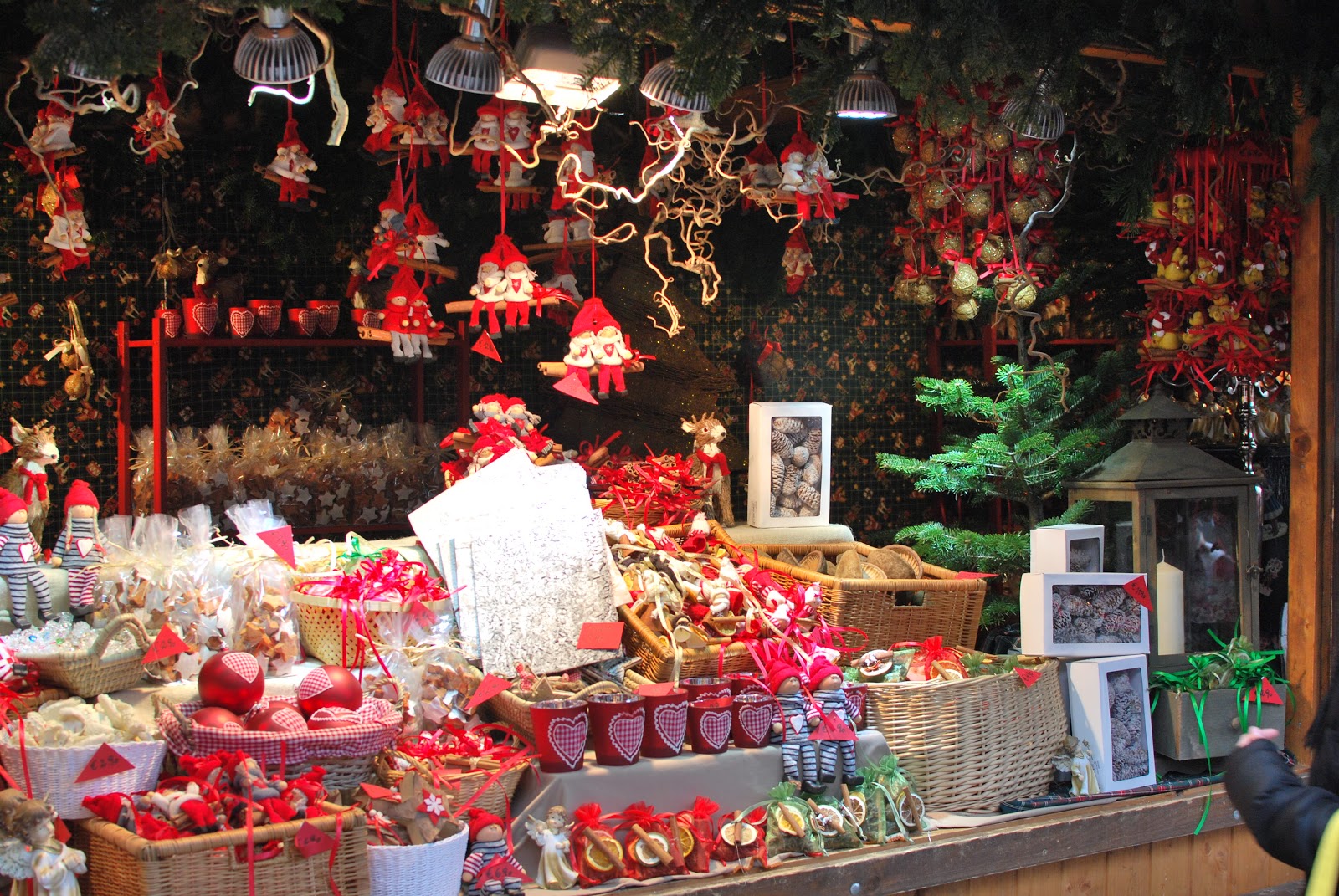
One of hundreds of festive stalls

Ordering in Austrian is actually quite tricky

In addition to the large market at City Hall, we explored three other markets while in Vienna. The Weihnachtsdorf Maria Theresien-Platz Market, located on Museum Quartier next to the Natural History Museum, is still quite small, and only in it's fourth year of operation, therefore the walkways and stalls are less crowded than some of the larger markets (which we enjoyed). Besides a great selection of culinary treats, we found some unique gifts at the market to take home as well.

Hand painted ornaments

Although a bit difficult to find, as it's located in the central courtyard of the former General Hospital (now part of the University Campus), we found the Weihnachtsdorf im Alten AKH, (or "AKH" Christmas Market) on our second attempt and were really pleased with the younger atmosphere, clearly influenced by it's proximity to the University. We also discovered a delicious treat at this market called Schneeballen (or snowball) which is a type of pancake dough, cut into strips and formed into a ball before being fried and covered with powdered sugar. If you've ever had Italian Crostoli it tastes similar, however the consistency is more that of a cookie and less crunchy. 

Row of colourful stalls

Adorable little ornaments with fragrant cinnamon

Finally, we found our way into the historic neighbourhoods of the 7th District and the Weihnachtmarkt am Spittelberg. Although small, only a few blocks in length, this market (and surrounding stores) focuses on craft work and features some lovely jewellery, ceramics, and traditional holiday decor. I really enjoyed the handmade feel of this market and was able to find an adorable ornament to bring home as well. 

The amazingly tall tree in Rathausplatz

Strolling through these markets became one of our main activities in Vienna, taking some time away from museums and landmarks. However we really enjoyed trying new foods and immersing ourselves in the holiday spirit. After taking in the sights, sounds, and smells of these markets, it's easy to understand why so many tourists visit Vienna in December. Unfortunately, some larger and older markets we not yet open during our visit, (we were about a week too early but luckily didn't miss out all together) which seems to me like the perfect excuse to come back!

By Unknown with No comments

Hey there!

Calli and Travis returned from a four month trip through Europe more excited than ever to hit the open road. Who knows where they'll end up next...

  • Popular
  • Categories
  • Archives