Showing posts with label Andalucia. Show all posts

Monday, November 5, 2012

Spain - Our Top 10

Over our four weeks in Spain we were able to cover a lot of ground, visiting Madrid, Barcelona, and a number of cities in Andalusia with a short stopover in Lisbon part way through. Here are our favorite sites, most memorable meals, and must see attractions from our time in beautiful Spain!

Mezquita 
If you've had a chance to read up on our visit to the Mezquita in Cordoba, it's probably not a surprise that it took the top spot. From our first steps inside we were captivated by the forest of red and white arches, while the detail of the Mihrab and the stunning Renaissance chapel and alter rendered us speechless for the duration of our visit. 


Segovia
A popular day trip from Madrid, Segovia grabbed out attention with it's stunning aqueducts and held it throughout the afternoon with a display of breathtaking viewpoints, a fairytale like alcazar, and an incredible gothic cathedral.  


Markets Galore 
Travis may go for the food and Calli for anything kitschy, but in the end cheap prices and people watching is the great equalizer. We've found wonderful markets throughout Spain, from La Boqueria in Barcelona to San Miquel Market in Madrid, and wonderful small flea markets throughout Andalucia, we definitely got our fill of window shopping.


The last and greatest palace complex of the Moorish civilization in Spain is not only Granada's crowning jewel but a definite must see as well. The lines may be long, the admission process a bit convoluted, and the site expansive, but any confusion and sore feet are immediately forgotten upon entering the Nasrid Palace. 


Like much of Andalucia, the beauty within this building lies in the seamless melding of Islam and Christianity. Rennaisance ceilings in some rooms, intricate tile work in others, and a central garden and reflecting pond made famous by Ridley Scott.


Gaudi devoted over forty years to shaping Barcelona's architectural landscape and today, the city, and millions of tourists each year, pay homage to his creative genius. With seven of his buildings categorized as protected UNESCO World Heritage sites there are plenty of chances to contemplate his unique style. 

Although the French Impressionists at the Thyssen topped our list of Top 10 Art - Spain and Portugal, the Prado museum won us over in the end. With a seemingly endless collection of paintings and sculpture it's possible to spend a week here and still not see everything.


Madrid's Architecture 
From the Cathedral to the Royal Palace to the Piazza Mayor to the Gran Via, no city thus far (except maybe Zagreb) has put on such a display of architecture. Wandering through the city we didn't know where to look next, or where to focus the camera.


Plaza de Espana 
Hearing it was a worth a look, we decided to wander towards Parque de Maria Luisa one morning during our time in Seville. We ended up spending half the morning exploring and photographing the amazing Plaza de Espana. In a city boasting one of the largest cathedrals in the world and the only alcazar still in use in Europe, the Plaza has some heavy competition and it definitely holds its own.


We had a blast walking around the stadium, watching old people scream at the players, and laughing as a young guy paced up and down the aisles "coaching" the players and yelling instructions to the (actual) coach across the stadium. Oh and seeing a 30 yard volley to win the game in the 94th minute wasn't too bad either.
 

By Unknown with No comments

Sunday, November 4, 2012

Malaga - More than a Stopover

Unlike Seville, with the Cathedral; Granada, with the Alhambra; and Cordoba, with the Mezquita, we didn't plan on visiting any specific sites during our stay in Malaga, instead opting for a calm and restful end to our time in Andalucia. The city, however, had other plans, offering up a feast of fortresses, harbours, cathedrals, markets, and a beautiful historic core all worthy of exploration and making it nearly impossible to sleep in. Luckily, I've never found sleeping in too difficult, and the full breakfast offered at our hotel, complete with fresh waffles, made the morning feel overly indulgent.

Locks on the bridge we crossed on our way to the hotel


With so much to see, and just two days before our flight to Milan, we chose to explore Malaga from the outside, deciding not to enter the beautiful renaissance Cathedral or the grounds of the ancient Moorish Castle. A mistake? Perhaps, but it worked well for us, allowing us to explore at a leisurely pace and recuperate from a long month crisscrossing our way through Spain.  As a result, most of our favorite moments in Malaga aren't specific sites or activities, but rather the overall atmosphere of the city. 

Roaming through the local market was fun like always.


We began our day by wandering in no particular direction and simply enjoying the beautiful sunny weather. Eventually, we found ourselves in front of Malaga's Rennaisance Cathedral and took some time to listen in on tour guides describing its history (Did you know that only one of the two towers is completed - apparently the money raised to build the second was donated to help the USA gain its independence from Great Britain?). After that, we wandered down to the harbour and through some of the beautiful gardens, watching the people chatting after finishing a Marathon that had taken place that morning. 

The completed tower of Malaga Cathedral

Our first true Renaissance Cathedral


We stumbled upon a market in front of the ancient Roman Amphitheater at the base of the Castle and, after perusing the goods which included a vast assortment of jewelery, crafts, and carved wooden penises, we feasted on some dried apricots and honey roasted peanuts. 

The Castle and some of the lovely gardens

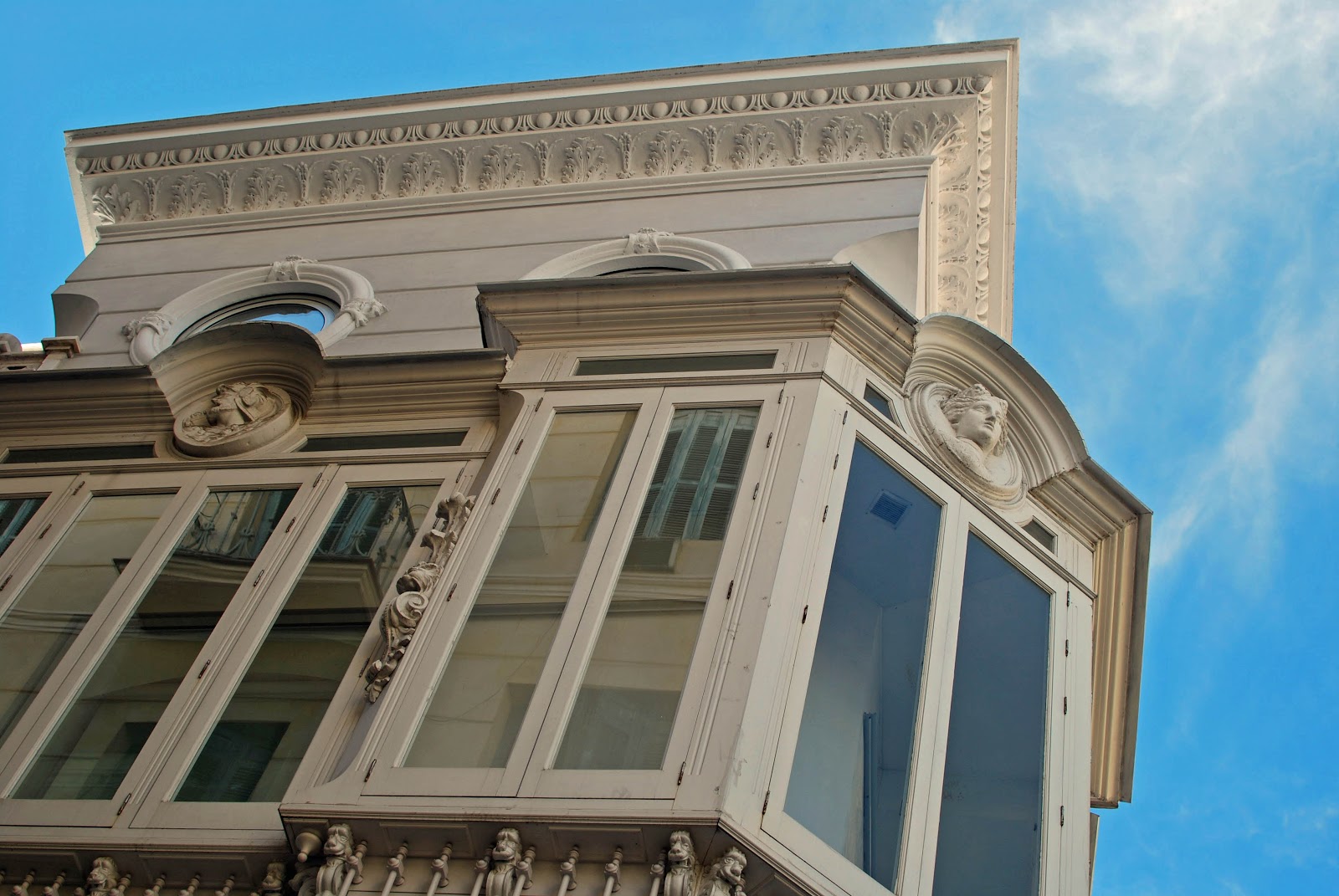
Great architectural sights are found all over the city


We finished off our day of relaxation by looking for a place to watch some soccer (clearly Travis' idea), eventually ending up in a small Irish Pub. The bartender, beer in hand, was more than willing to pour us a pint, but the kitchen was closed until the Malaga game was over. Twice during the match a couple British lads came in looking for English soccer, but their request to change channels was adamantly refused.

The old castle

The castle and old Roman Amphitheater


Once a stop over for tourists destined for the sun soaked beaches of Costa del Sol, Malaga has shown that it has plenty more to offer and tourists are starting to listen.

By Unknown with No comments

Saturday, November 3, 2012

Our day at the Alhambra of Granada

As part palatial opulence, part crumbling fortress of a bygone era, and part spectacular water gardens, the Alhambra of Granada exemplifies the pinnacle of former Moorish power in modern day Andalucia, and is undoubtedly one of the most important architectural sites in the whole of Europe. Most certainly the main reason that millions of tourists flock to Granada every year (although it would be worth it by itself in our opinion), we knew that we just had to go there...and so we did. But there were a few bumps along the way...

Part of the fortifications of the Alhambra from the outside

Calli - "It was only a matter of time before one of us caught a bug."

After a few migraines and an initial week of cold/congestion in London (the result of rain one night at the Reading Music Festival), I was sidelined for a day in Granada by a flu-like bug. After whining and complaining and apologizing over and over about ruining the day I decided there was nothing left to do but sleep and sent Travis off to explore on his own (he returned a couple hours later with lunch, so sweet!).

Unfortunately colds and flus don't stop while traveling, and can often be more common due to little sleep and poor diet. Although the cure is often simple - rest - slowing down for a day or two can be frustrating. With two days in Granada I was not prepared to spend both in bed and miss out on the Alhambra, especially considering the complex advanced booking system. We had our day and entry time and it was non-negotiable.


The Alhambra

A bit tired, somewhat sluggish, and very cranky, we made our way to the Alhambra early in the afternoon for our 2pm entry time. Surprisingly, for a site so busy, we barely noticed the droves of tour buses parked outside the gates. Instead, we were immediately entranced by the sounds of the nightingales that call the park home and the smells of the seemingly endless roses, myrtles, and oranges.

The view from the Alhambra towards Sacromonte and the Albayzin

The entrance took a few frustrating minutes to negotiate (it seemed like the most incompetent people ever to travel to Spain were in front of us...isn't that always the case), but once we were in it was a proverbial festival for the senses. 

The Alhambra site as it stands today can be roughly separated into 4 parts - the Generalife, the Alcazaba, the Palace of Charles V, and the Nasrid Palace.

The Generalife are the former gardens that surround the fortress, palace, and other buildings. They Palace located in the gardens and the gardens themselves were a getaway place for the royalty, as well as a place for the public to grow fruits and vegetables. Elegant water features, perfectly manicured gardens, and fantastic views abound here.


A view of the Generalife and its beautiful manicured gardens


The Alcazaba is the former citadel and oldest part of the complex. While some of it has crumbled from earthquakes and neglect over the years, the outer walls, towers, and ramparts still stand and make it an imposing presence even to this day. The main tower offers fantastic panoramic views of the entire city and its surrounds.


One of the Towers of the Alcazaba, with Granada Cathedral in the distance

The remains of the interior of the Alcazaba


The Palace of Charles the V was a late addition to the site. Built by, you guessed it, Charles V, the Rennaisance architecture is a striking juxtaposition to the rest of the site, but it is definitely worth a visit. Apparently the round central patio acts has perfect sound amplification at its center. 

The rectangular exterior of the Palace of Charles V

The round patio in the center of the Palace of Charles V


The Nasrid Palace is the crowning jewel of the Alhambra. Built for the last Emirs of Spain as the rest of al-andalus was being reconquered, it represents the greatest example of Mujedar architecture in Spain. Deceptively drab from the exterior, the interior is an architectural gem with scripture from the Koran adorning the walls, intricate tessellations (that inspired M.C. Escher), and ornate stalactite ceilings. 

Patio de los Arrayanes (The Court of the Myrtles)

The detailed decorations are amazing

One of our favorites - the ceiling looked like the starry sky

Detailed wall carvings

Patio de los leones (Patio of the Lions)

The exteriors of the buildings were intentionally drab


We thoroughly enjoyed our visit to the Alhambra, even while jockeying for position to take photos among the droves of other tourists. The site as a whole is very extensive, an incredible deal for the 13 Euro price tag, and reason enough to visit Granada.

By Unknown with No comments

Wednesday, October 31, 2012

Cordoba in Pictures

While planning our trip through Andalucia we allocated a full day to Cordoba. After arriving mid morning from Seville, we wandering through Cordoba's narrow streets, exploring different neighbourhoods, before spending a couple hours in awe of the Mezquita - both inside and out!

The next morning we had a few more hours in this lovely city before catching the bus to Granada and chose to spend our time at the Alcazar de los Reyes Cristianos. The fortress has a few rooms inside to check out but the main draw are the incredible gardens. 

It turns out Cordoba has a lot to offer in addition to the Mezquita...

Morning view over the city from the Alcazar

Roman Bridge

Puerta del Puente

Fuente de los Jardines de Colón

Roman ruins in the middle of town

Alcazar gardens

Ruins from a previous muslim fortress (under the Alcazar)

Final blooms before fall

Sculpture in the Alcazar gardens

By Unknown with No comments

Tuesday, October 30, 2012

The Mezquita - Unlike Any Church We've Seen

While sites like the Sagrada Familia, the Alhambra, Santiago de Compostela, and the Guggenheim tend to dominate Spain's tourism scene, attracting hordes of tour buses daily, our undisputed favorite was actually a bit of a surprise.

Found in Córdoba, a town of just over 300,000 people with a small town feel, the Mezquita is an ancient site of both Muslim and Catholic worship. Easily one of Andalucia's most important historical sites, the surrounding city adds to the allure with narrow winding streets, preppy white and yellow painted houses, and an almost complete absence of cars in many of the neighborhoods. Criminally, few tourists visit this gem of a town, but those who do venture here are immersed in a city with an astounding amount of history.

The Mezquita has held importance as a site of worship since the 7th century and it's influence as a Muslim Caliphate (government capital) helped Cordoba grow to one of the largest cities in the world. As a result, Cordoba holds the distinct honor of having been both a Roman provincial capital and a capital of the Arab state of Al-andalus. It's importance in the Muslim world even rivaled Damascus during medieval times. Our visit quickly became a long term affair inside this amazing building, exploring its never ending rows of red and white Muslim arches and sitting in awe in the Cathedral's pews where Baroque, Renaissance, and Gothic architecture intersect.


 Exterior with ornate Moorish doorways and Catholic belltower (via)


Roof line showing the elevated Cathedral  (via)


Muslim details over a doorway


Original orange grove in the courtyard


Worship on this site dates back to the Visigothic Church of St. Vincent in the 7th century, the remains of which are still visible via plexiglass floor sections inside the Mezquita. As well, many artifacts from the ongoing archaeological excavations are on display inside.

After the Muslim conquest of the Iberian Peninsula, the church was converted into a mosque beginning in 784 AD. Each subsequent ruler added his personal touch, enlarging the interior or adding a minaret, until it reached current size in 987 AD where it stood as one of the most important sites in the Islamic world until Cordoba was reconquered by King Ferdinand III in 1296.


Remains of the Visigoth Church under the current site (via)

Mihrab - all Muslims would face this while praying

Ornate ceiling over the Mihrab

Surprisingly, the conquering Christian Spaniards chose not to demolish the Mosque and rebuild, instead deciding to alter the building. This controversial decision resulted in a unique church unlike anything we've seen before, with a central Catholic chapel surrounded by an endless forest of red and white Mujedar arches. Adding to the uniqueness, the central chapel features a melding of different architectural styles as each King added and altered the church during his reign.   

The recognizable red and white arches

Never ending rows of incredible arches

Mix of Muslim and Catholic elements

Chapel ceiling, hand painted

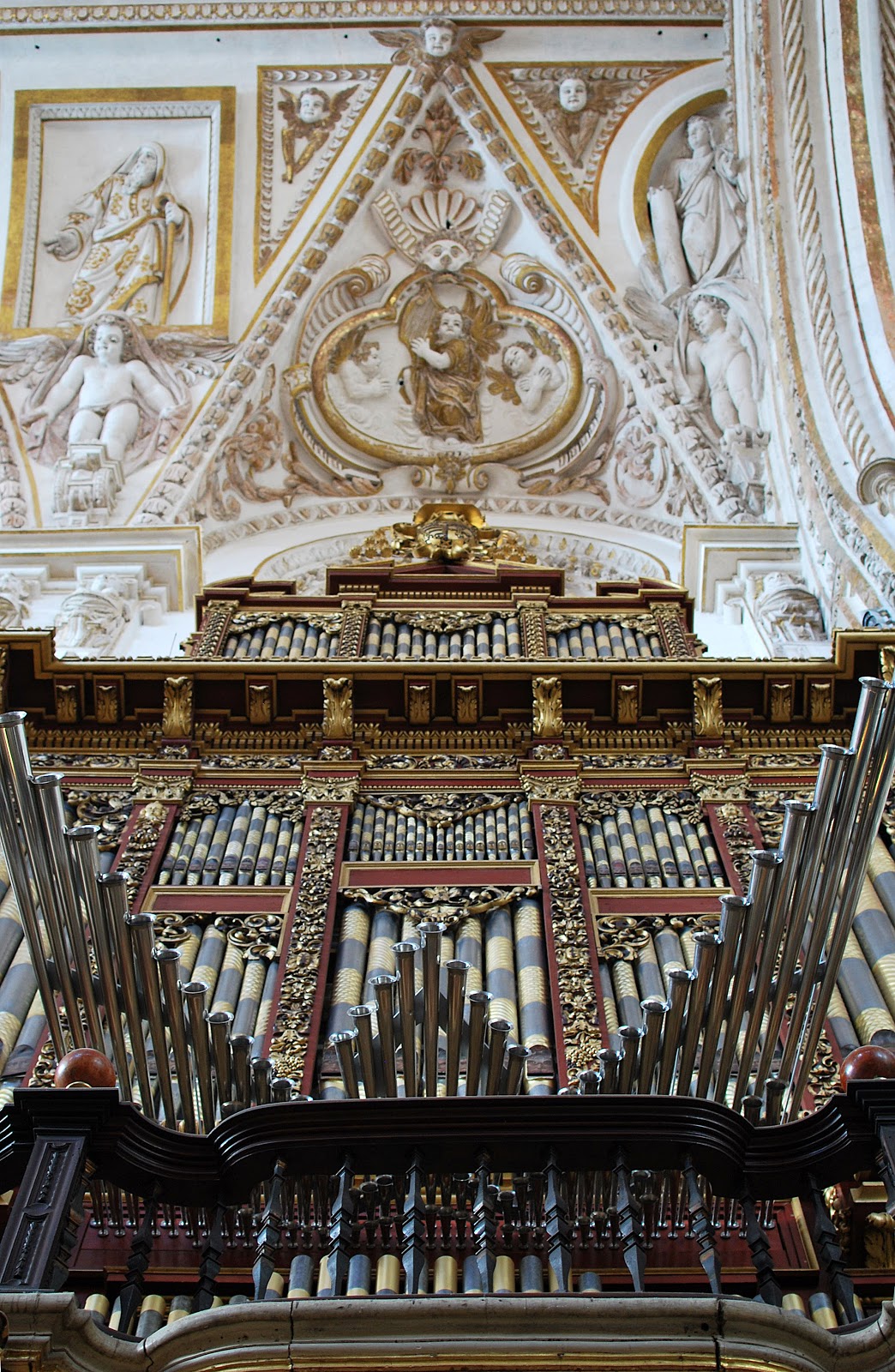
Beautiful organ

Catholic details

All of these actions have resulted in one of the most striking churches we've visited thus far; withing five minutes of wandering around we simultaneously whispered to each other, "this is the best building I've ever been in." Seemingly shrouded in controversy that continues to this day with Spanish Muslims demanding the right to prey onsite, the Mezquita's stunning architecture, religious importance, and compelling history make it a must see site.

By Unknown with No comments

Hey there!

Calli and Travis returned from a four month trip through Europe more excited than ever to hit the open road. Who knows where they'll end up next...

  • Popular
  • Categories
  • Archives