Showing posts with label UK. Show all posts

Wednesday, March 6, 2013

Bath - A City of History

As the only British city to be regarded in its entirety as a UNESCO World Heritage Site, Bath is undoubtedly one of the most historically important and interesting cities in all of the UK. Originally settled as a Roman resort called "Aquae Sulis" due to the presence of the world famous thermal springs located there, today Bath is a thriving resort town, and one of the most popular tourist spots in the country.

The Roman Baths (via)
The Roman Baths are undoubtedly the main attraction to most of the 4 million people that make the 1.5 hour trip from London. First noticed by the Romans and then made popular once again under Stuart and Georgian rule for their supposed healing properties, Bath became one of the in-style destinations for the British upper class and has remained so to this day. But the Roman Baths are not all that Bath has to offer. 

The Royal Crescent (via)

Some of the beautiful green space in Bath
Given its UNESCO World Heritage Site status, it should not be surprising that the city offers more than just the baths. A fantastic Abbey, some of the best examples of Georgian Architecture in all of England, one of only four store-lined bridges in the world, great parks, wonderful shopping, and a fantastic rugby team all await visitors to the City of Bath. 

The entrance to Bath Abbey

As we only had a day to explore the city, we decided to use some of the experience that we had gathered on our trip and utilize the free walking tour of Bath provided by the Mayor of Bath's Corps of Honorary Guides. These guides, many of which are retirees with extensive knowledge of the city, provide free (really free - like no-tips-allowed-free) approximately 2 hour walking tours of the major sites of Bath. 

The Pulteney Bridge - one of only four shop-lined bridges in the world

Unfortunately for us it was pouring rain the day we visited, but our guide made the best of it and we spent as much time as we could under cover. We learned about the history of the Roman Baths and the early settlement of the city, how Jane Austen ties into the city, the different architectural styles of the city's neighbourhoods, and many more interesting facts. We even saw Nicolas Cage's house.

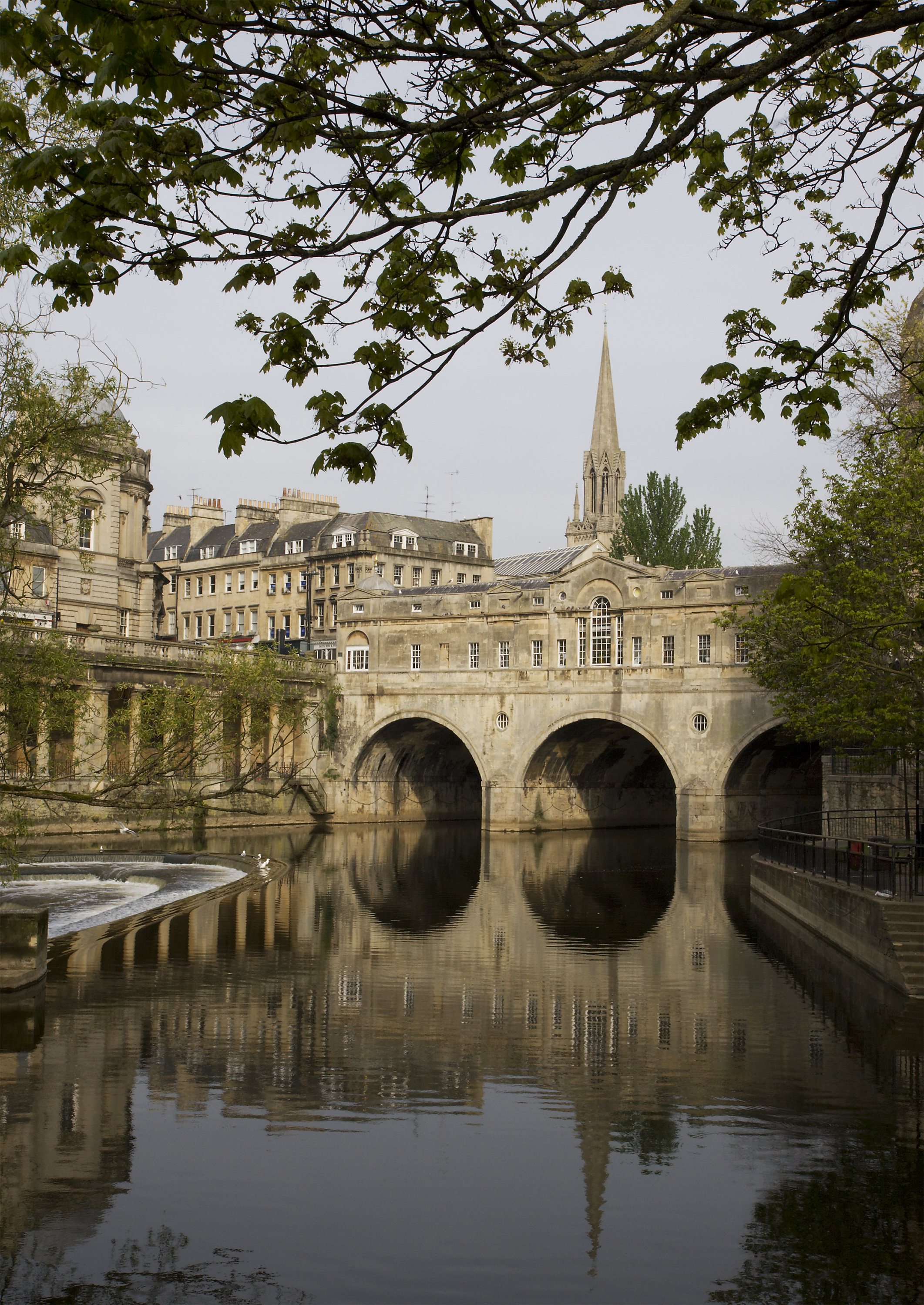
The River Avon and the Pulteney Bridge (via)

Even though we got soaked all day long, Bath still was a fascinating city to visit and well worth the time. It is easy to get to via train from London (and the station is right in the center of town), and is compact enough to be explored by foot in a day or two.

By Unknown with No comments

Monday, March 4, 2013

A Trip to Old Sarum

After exploring Stonehenge, we decided to take advantage of our tour bus' optional stop at Old Sarum and hopped off, hoping to experience something a little more off the beaten path in Wiltshire County. Our lovely host Trish had recommended Old Sarum as an interesting site, and she was spot on. Unfortunately we hadn't tuned into the weather report that morning, or inspected the ominous clouds in the distance before bidding adieu to our transportation into Salisbury, and we were in for a wet surprise. 

The remains of the Motte-and-bailey castle defences.

The site of the earliest settlement in current day Salisbury, Old Sarum contains evidence of human habitation as early as 3000 BC and is now an English Heritage Site open to the public. While not a whole lot remains these days, Old Sarum was once an impressive Iron Age hill fort of high strategic value.The site was first  used by the Roman before being passed on to the Saxons and then the Normans. Under Norman control a large royal palace for King Henry I was built and stood as a royal residence during the 12th and 13th centuries. 

The ridge running around is covered in chalk

What remains of Old Sarum today is a castle motte, complete with part of the original stone walls and the remnants of the massive ditch surrounding the site.The foundations of many of the walls of the fort and castle, as well as the cathedral outside the castle walls, are still intact today and visitors are free to walk amongst the ruins.

The remains of the iron age fort and subsequent castle

After a short hike to the top, we were impressed by the seeming impenetrability of the fort. Even as it lay in ruins, nearly two thousand years since it was last inhabited, the enormous banks and ditches that surround the fort stand as evidence of it's once strategic military presence. The River Avon flows just a few hundred feet away, and the spire of Salisbury Cathedral can be seen in the distance.  

The remains of the old Cathedral at Old Sarum

We spent a good hour exploring the site and admiring the fantastic views. There were a good number of people going for walks along the Avon and playing football in the park nearby.As it looked like a nice day, we decided to take the popular walk from Old Sarum back to Salisbury...poor choice. The British winter crept up on us about halfway through the 30 minute walk and we were swept up in a torrential rainstorm not unlike the one we experienced in Kotor. Despite this minor wet setback, we ended up having a fabulous time visiting both Stonehenge and Old Sarum, and would definitely recommend a visit if you have the time. 

The view to town with Salisbury Cathedral - look at that inviting sky!

By Unknown with No comments

Sunday, February 10, 2013

The Mystery of Stonehenge

Standing amid the towering slabs of rock it's impossible not to wonder, as millions have before you; why here, in the middle of idyllic rolling fields and deeply wooded forest? How were these gigantic stones cut and moved, tens of thousands of years before hydraulic machines and towering cranes were even an idea? Who were the people that created and built this magnificent site? What was the purpose of such a large monument? For the last  leg of our trip, we were on a journey to find out!


With a few days in the UK before our flight home, we decided to leave London for the quiet countryside of Wiltshire county. But the beauty of the surrounding rolling hills and idyllic towns were only a part of the attraction - the real appeal was the allure of Stonehenge. Famous for it's enormous rocks, and how little historians have been able to unearth about it's purpose, Stonehenge is a enchantingly beautiful sight still brimming with mystery and intrigue. 

As life in the English countryside is much slower than that of London, we found bus service between towns, and to Stonehenge, a bit hit or miss. Unfortunately the public bus route serving the site was cancelled last year leaving only two options to reach Stonehenge without a rental car. Option 1 - catch a public bus to nearby Amesbury and walk two miles to the site, or Option 2 - board the Stonehenge tourist bus in Salisbury (where we were staying) for a direct trip to the site and optional return stop at Old Sarum. 

The iconic stones of Stonehenge in all their glory.

Although we normally try to avoid tour groups by any means necessary, after a warning from our B&B owner that tourists have been killed walking along the winding road from Amesbury to Stonehenge, we decided to cough up the twenty pound/person fee for the tourist bus (this fee does include admission to Stonehenge and Old Sarum as well as front of the line access). 

As it turns out, the bus was actually quite enjoyable, although a bit pricier than we would have preferred, and the audio track that played through the speakers was more informative than annoying.

The sight as you enter the grounds.
The site's visitor centre isn't what you'd picture for a site as important and well visited as Stonehenge, especially after visits to comparable ancient sites like the Acropolis, Alhambra, or Colosseum. With only a small ticket window, gift shop, and portable lavatories on the side of a two lane country road, the site is functional and understated, fitting in perfectly with the quaint countryside. However rustic it may be, what the facilities lack in size and grandeur the stones more than make up for. 

The size of the stones is amazing once you get up close - over 24 feet tall in some cases.

As you pass under the road and finally enter the site, you are immediately entranced by the stones. A haunting and ethereal echo of days long since forgotten, the massive stones rise in majesty and stimulate even the most meager of imaginations. Theories abound regarding their construction and purpose - some sane and some gleefully insane. Whatever you believe to be true, no one can deny the massive effort it must have taken to transport and erect the stones. 

The "Heelstone" sits just outside the circle

While you can walk in and amongst the stones if you make special arrangement, the vast majority of visitors just take the short circular pathway around the stones - a thoroughly satisfying experience in its own right. The audioguide given to you for free upon entrance enhances the experience with fascinating facts about the mysterious and storied history of the site. 

A marker showing the location of one of the original wooden posts from the original henge

There's just something about Stonehenge that lures people to it...not unlike the Pyramids or the Colosseum. It's got the right combination of mystery, intrigue, and extravagant speculation that just make it a must see. The site itself is not what you'd expect (although I think that's a good thing), but the aura of seeing something that people still don't fully understand is definitely an uncommon experience and one that you won''t forget.

One of the many burial mounds scattered around the region


While the site of Stonehenge is undoubtedly the main reason that people venture to England's West Country, it should be noted that it is not the only neolithic site in the region. In fact, this particular region of the country is one of the most dense when it comes to neolithic sites. If Stonehenge managed to intrigue you, and you want to see something else, check out the henge at Avebury, Woodhenge, the Durrington Walls, or even Old Sarum.

By Unknown with 1 comment

Friday, February 8, 2013

Surprised by the Victoria and Albert Museum

Amid all of London's amazing (and free!) museums, it may be easy to overlook the Victoria and Albert Museum - in fact we almost did. Luckily, we decided to pop in for an hour, as it was free and close to our hotel, and we were completely surprised by it's ability to offer something unique and different when compared to many of the more traditional and famous museums in the area. 

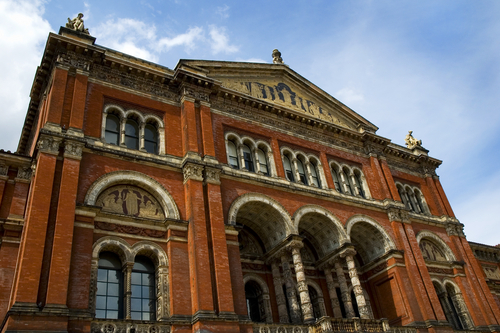
The facade of the V&A (via)

The beautiful glass sculpture in the lobby


A grand piano in the paintings hall

A great example of Chinese sculpture

Walking in, we only knew that the museum's displays are focused on art and design. But this only begins to describe the treasures it holds, and from the moment we entered the beautiful Victorian building to the moment we left, we were surprised and impressed with what uncovered around every corner. 

A screen from a home in the ancient Middle East
Perhaps the most interesting aspect of the Victoria and Albert Museum lies in it's laid out. Pieces are grouped into categories (Fashion, Art, Metalwork, Sculpture, Architecture, Painting...) and then displayed by period, which allows visitors the unique opportunity to compare similar trends within an era of time. This provided a stark contrast to the many museums we visited prior that display their items by civilization or origin (Egyptian, Roman, Middle Eastern...). This layout also allowed us to compare and contrast many of the different trends in far reaching areas of the world at a single time in history. As a result, delicate hand-sewn shoes worn in Europe reside next to two-toed socks worn with sandals in Asia dating to the same time period, while a nearby case holds an arrangement of glistening jewels showcasing some of Marie Antoinette's incredible rings and pendants, as well as those worn by her counterparts during the same period in Asia, Africa, and the Middle East.

Medieval wooden sculpture

Beautiful stained glass

The Victoria and Albert Museum houses a permanent display of over 4.5 million pieces and is sure to offer something for everyone in your party. While we thoroughly enjoyed many of the displays, Calli was particularly fond of the costume collection featuring designer outfits and accessories from the 1600s to present day. It was amazing to see the many layers of undergarments and petticoats that went into the outfits of the 17th century and see how drastically the styles changed as we circled the room. To demonstrate the fashion trends, the displays incorporate many runway pieces from famous design houses including Chanel, Dior, Yves Saint Laurent, Vivienne Westwood, and Valentino.

1960s style

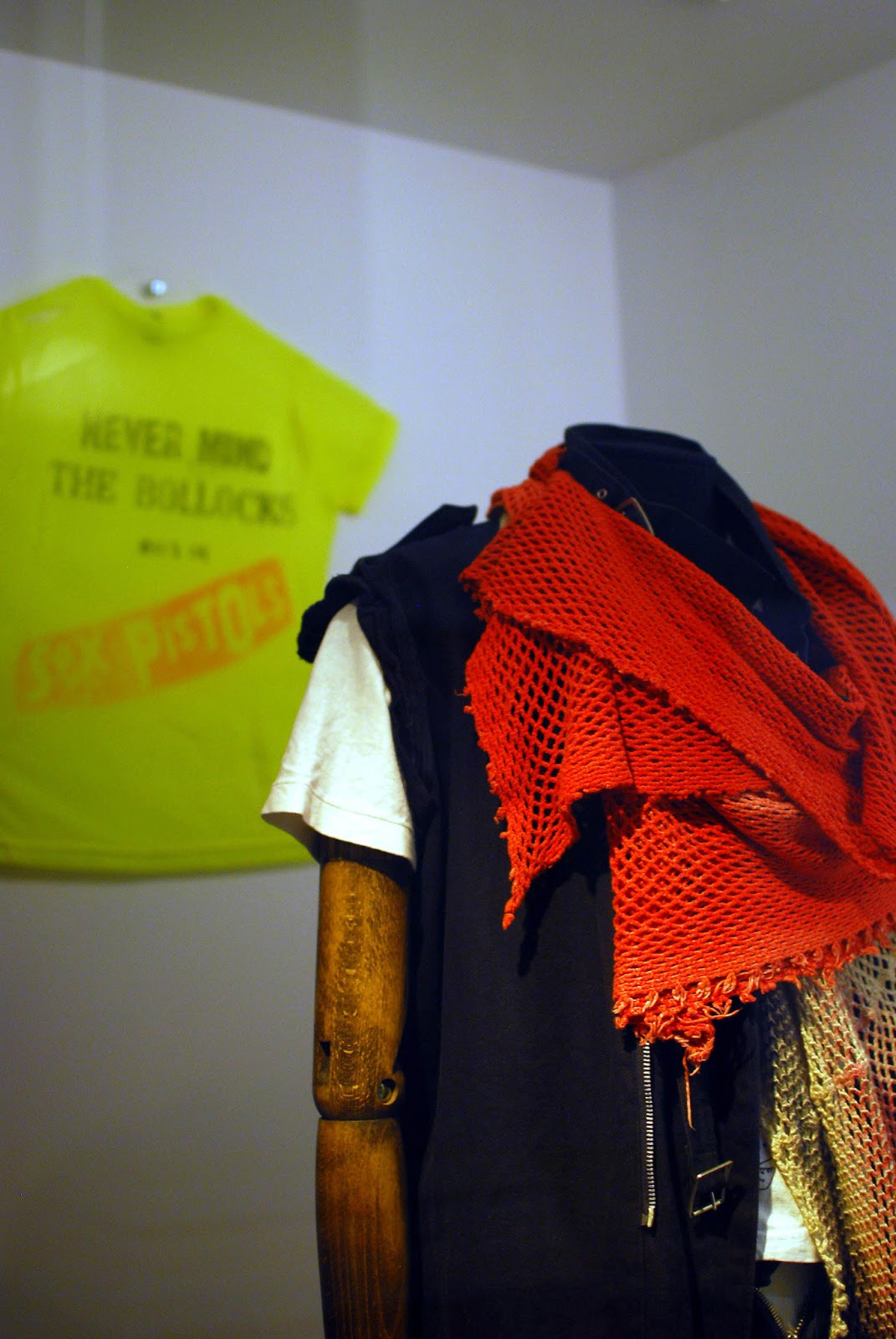
Sex Pistols-inspired punk style

Some articles from Christian Dior

Another section of the museum we found fascinating was the architecture displays. Containing building elements such as the two top stories of the facade of the Sir Paul Pindar house, a survivor of the Great Fire of London that dates to the 1600s, and an almost intact Renaissance chapel from Santa Chiara, Florence, it's impossible to not be impressed. 

The top two stories of the Paul Pindar House (via)

For those that love art, a wonderful collection of paintings from the  likes of Constable, Turner, and even Raphael await. Like sculpture instead - you're in luck as works from Bernini, Canova, Rodin, and many others await. And best of all, you can enjoy them in relative peace (when compared to the National Gallery or TATE) as the V&A is much less busy than many of London's other museums. 


Whatever you like in museums, you are sure to find something that you like in the Victoria and Albert Museum - and probably something you didn't even know you like as well.


As with the majority of the free museums in London, you do have to pay for some of the temporary exhibits if you want to see them. To check out what's on when you are there, you can visit their website here.

By Unknown with No comments

Friday, January 25, 2013

Victoria's Secret Hits London

Glossy black, lacquered fuchsia, and sparkling chandeliers - Victoria Secret epitomizes everything girly (positive body images excluded). However, their new European flagship store in London kicks everything up a hundred thousand notches or so. With floor to ceiling damask wallpaper in a velvet texture, faceted glass-pained banisters, leopard print rugs, four story spiral staircase, and private rooftop suite reserved for A-listers needing a glass of champagne to go along with their private fitting, the store redefines the word glamorous.

The stunning staircase (via)
However, as beautiful as it is inside, the store is equally stunning outside with large window displays featuring the nearly-there runway costumes donned by the Angels in the brand's annual runway show. Getting up close to these costumes you can easily see the hundreds of tiny gemstones, delicate lace, silky satin fabric, and tiny bow embellishments that make up these intricate costumes, as well as an accompanying photo from the runway show and short description. 

Doutzen Kroes on the runway...    (via)

...and her outfit on display in the store.

Another outfit

And one more!
Hate the lingerie mogul if you will, this store is definitely worth a walk-by when in London, as is the whole of Bond Street where it's located.


By Unknown with No comments

Tuesday, January 8, 2013

Relaxing in Salisbury

After 116 days, 5 night buses, a night train, and, well, everything else that goes with traveling for an extended length of time, we were ready to head home. Our clothes stunk no matter how many times we washed them, our bags were laden-down with gifts for awaiting family and friends, and our hair was in need of a good cut. But we still had 4 days left! Fortunately for us we had planned for this very moment at the half-way point of our trip, and were now in-store for 4 days of rest and relaxation in England's West Country.

The John Constable-inspiring scenery surrounding Salisbury
After some research and debate on where to spend our remaining days in the UK, we eventually settled on heading west from London to the cathedral city of Salisbury in Wiltshire County. With its proximity to the UNESCO World Heritage Sites of Stonhenge and Bath, as well as the numerous interesting sites in the city, we figured we would have the perfect mix of relaxation and adventure for the end of our journey.
Beautiful architecture in Salisbury

The stunning Salisbury Cathedral

Thankfully, Salisbury delivered exactly what we expected. Looking like it was straight out of Hot Fuzz, Salisbury simply oozes character and old British charm. With a magnificent cathedral and cathedral close, a great market, some wonderful architecture, and Constable-inspiring surroundings, the city is the perfect spot to spend a few days (or even more if you can spare it), and also provides a great base for exploring the surrounding regions (more on that to come).

St. Edmund's Church, just one of the many amazing old churches and buildings found in Salisbury


Making our stay even more enjoyable was our lovely hostess, Trish, and the comfort of the Old Rectory B&B. We rarely mention the places we stay (preferring to leave feedback on other sites), but we would be remiss if we didn't make mention of the Old Rectory, as its warmth and comfort was a large contributor to our enjoyment of the city and the region. Built immediately following WWI, its name comes from serving as the rectory for nearby St. Edmund's Church. Each room is named after a rector that lived in the house before its eventual conversion to a B&B by Trish's family. It was the perfect place to escape the rain and cold with a hot cup of tea, and provided us four of the best sleeps of our trip.

By Unknown with No comments

Wednesday, December 19, 2012

London Walking Tour - Along the Thames

Following our successful walk through Westminister with a guide from London Walks, we decided to tighten our purse strings and tackle the banks of the River Thames the next day with only the help of our trusty tourist map.

The iconic Tower Bridge

Starting at the Tower of London and Tower Bridge, we happily snapped photos and meandered along the river bank before making our way up to St. Paul's Cathedral, the Millennium Bridge, and Tate Modern.

Is that Richard Petty Blue?

Crest on the Tower Bridge

The modern shoreline

One of the things I really enjoyed about this part of London is the contrast between the historic stone fortress, rows of traditional narrow shops, and modern glass skyscrapers. It's quite a sight to see the Gherkin peak out from behind the fortress walls of the Tower of London, or the curvacious City Hall nestled on the river bank next to the Tower Bridge.

The Gherkin making an appearance...

... and again.

Classic English pub and name

St. Paul's Cathedral

I spy with my little eye, St Paul's Cathedral in the background


Although we had our map, it stayed tucked away most the day as the city has put in small area maps along the major streets every two or three blocks - tourists seem to still be benefiting from the 2012 Olympic Games. As it turns out, all we needed for a great day out was a quick stop at lunch to warm up with some fresh Vietnamese Pho. 

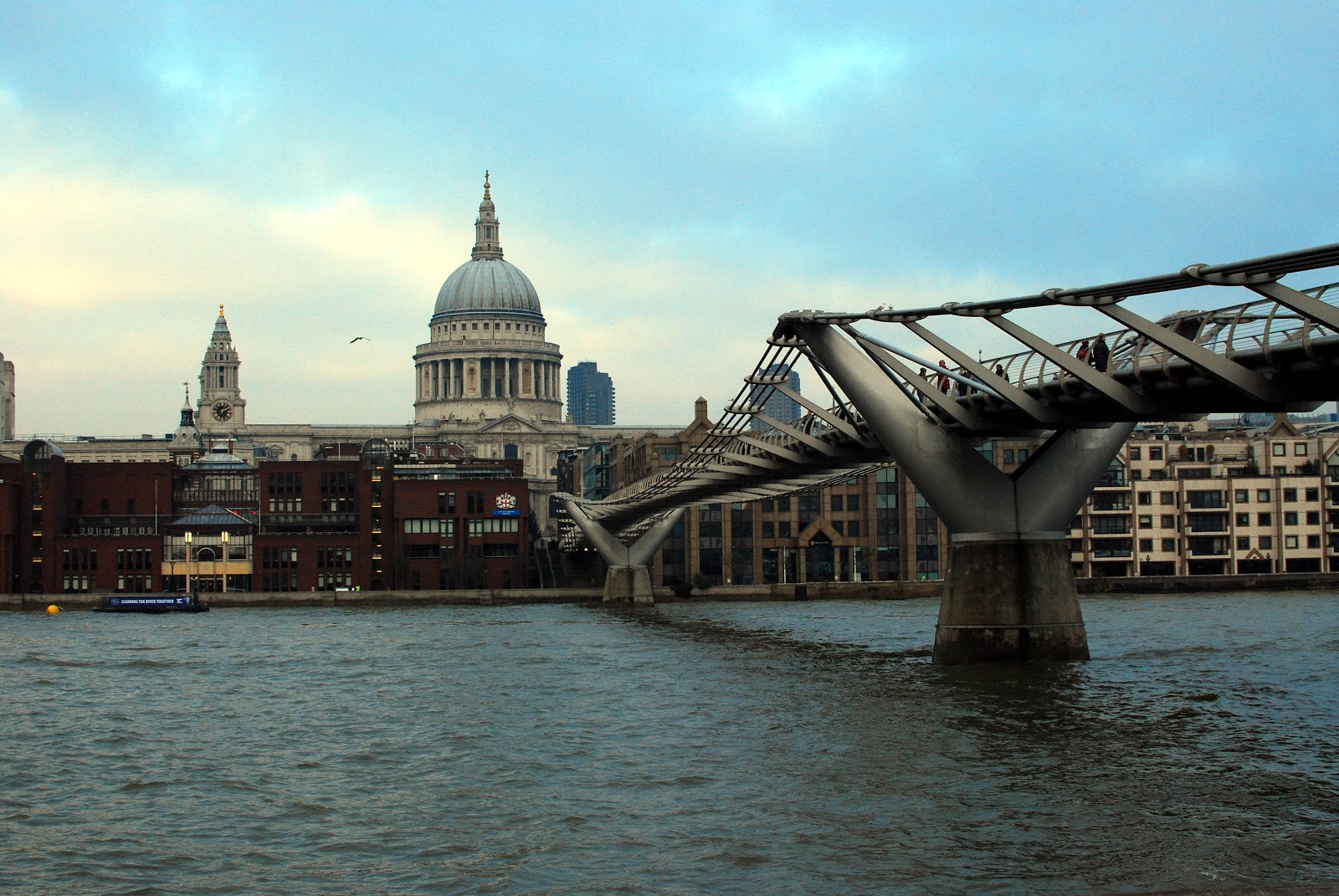
The Millennium Bridge and St. Paul's

Millennium Bridge

A surprise find

Mmmm warm Pho!

By Unknown with No comments

Hey there!

Calli and Travis returned from a four month trip through Europe more excited than ever to hit the open road. Who knows where they'll end up next...

  • Popular
  • Categories
  • Archives